
Bean to Brain: Our Cacao Research Partnership with the University of Otago
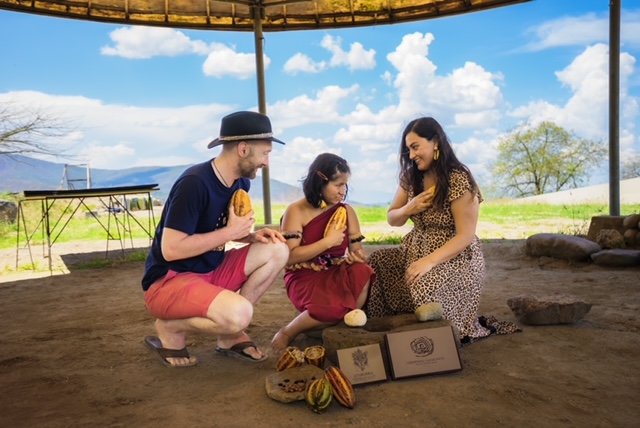
Why we're following cacao from bean to brain
Cacao has been used for more than 5,300 years as food, medicine and ceremony. Today it shows up at ecstatic dance, breathwork and sound journeys. But one question rarely gets a scientific answer: is all cacao equal?
At Seleno Health, we think the answer matters. How a bean is grown, fermented, dried and roasted could change what it does in the body. So we've partnered with the University of Otago to study cacao from the farm, to the gut, to the brain. We call it the Bean to Brain project.
This post explains what we're researching, why it matters, and what it means for the cacao you drink.
Our research partnership with the University of Otago
Seleno Health funds and collaborates on a PhD project at the University of Otago, New Zealand's oldest university. PhD researcher Lydia Bucher leads the lab work, titled Mechanistic Insight into Cacao Tryptophan Metabolism. Our co-founders, Dr Corin Storkey (PhD) and Sally Huapaya, guide the project, with Corin bringing expertise in serotonin and brain chemistry. Professor Lyn Wise co-supervises the project, bringing deep knowledge of the phytochemicals in cacao and how they modulate disease.
The partnership is part of our wider Maca and Cacao Research Program. Current projects include:
- Evaluating the cannabinoid-like effects of maca and cacao extracts in pre-clinical inflammation models
- Biochemical mapping of bioactives in traditional cacao preparations
- Decoding cacao's phytochemical diversity and tryptophan-mediated gut-brain interactions
Lydia presented the project at a University of Otago symposium in 2026, under the question: Can cacao also be a medicine for our minds?
From the bean: we go to the source in Peru
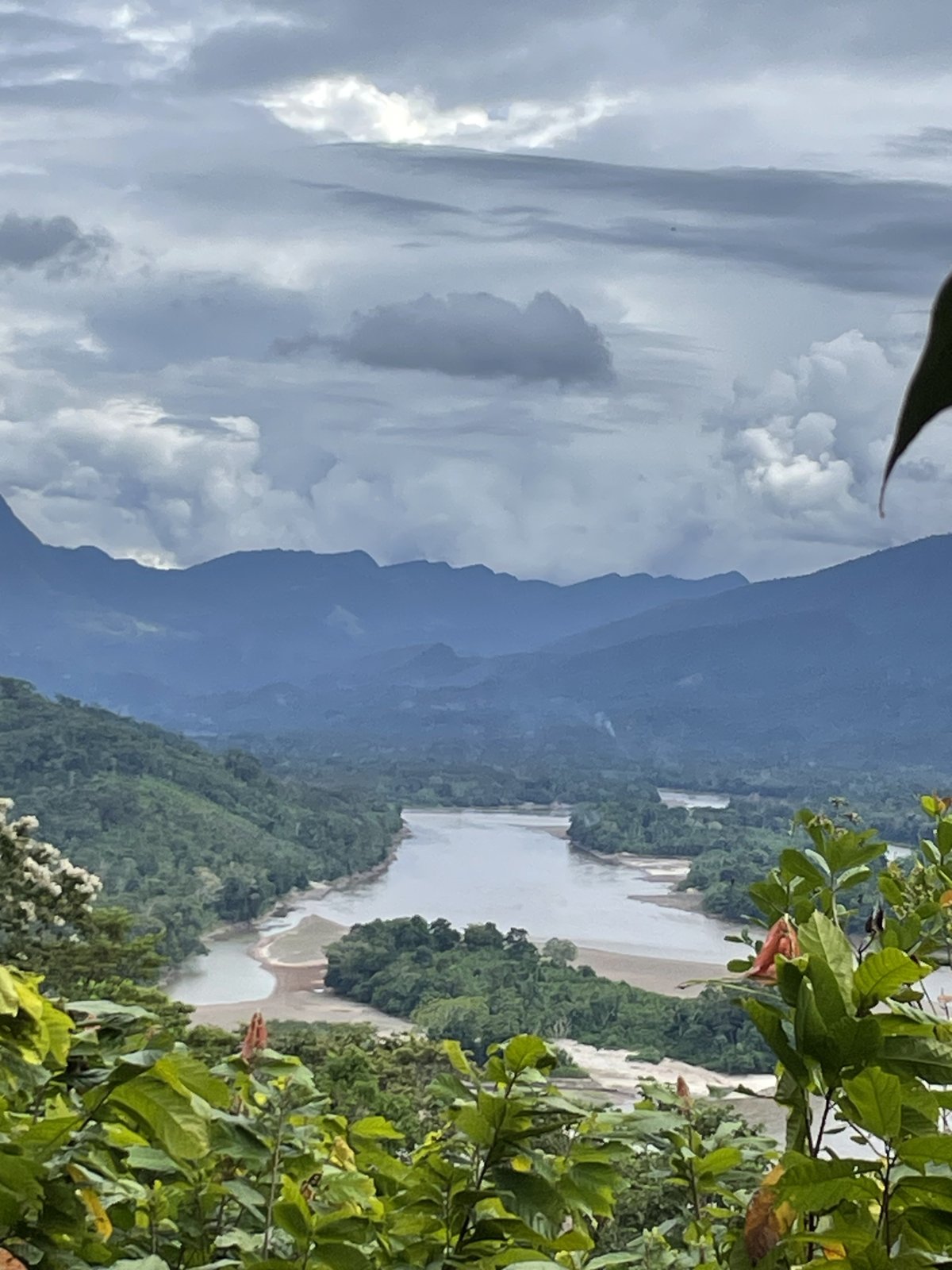
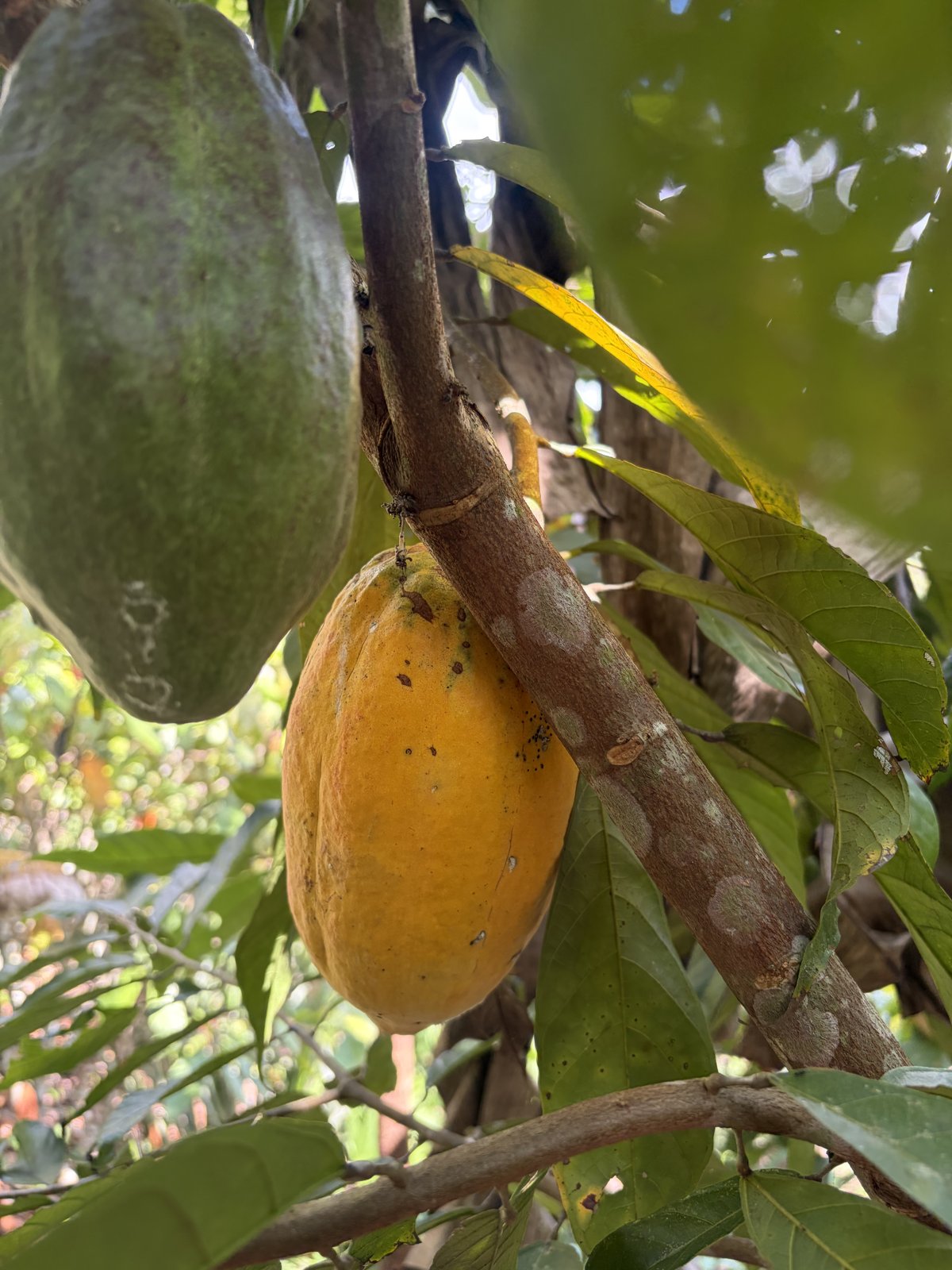
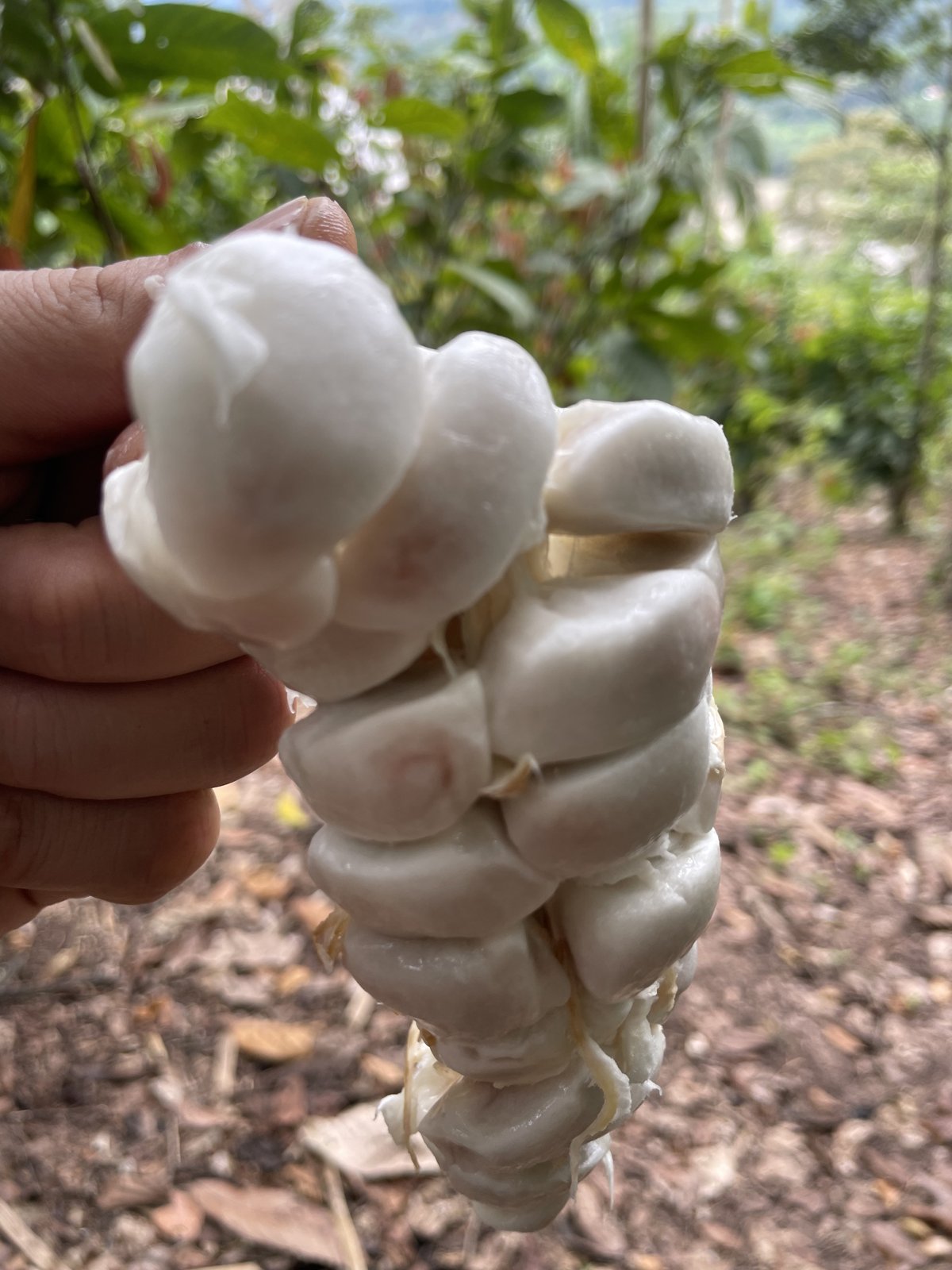
Good research starts with knowing exactly where your cacao comes from. That's why our co-founders, Dr Corin Storkey and Sally Huapaya, travel to Peru themselves. We walk the farms, open the pods, and work side by side with the families who grow and process our cacao. Every bean is traceable from farm to cup.

Peru may be the world's richest source of cacao genetic diversity. A 2023 study led by Bioversity International, INIA and the USDA (Thomas et al.) genotyped 3,413 cacao samples with 308 genetic markers. It identified 16 native genetic groups of wild cacao and traditional cultivars in Peru, including Chuncho, Cajamarca-Amazonas and Blanco de Piura.
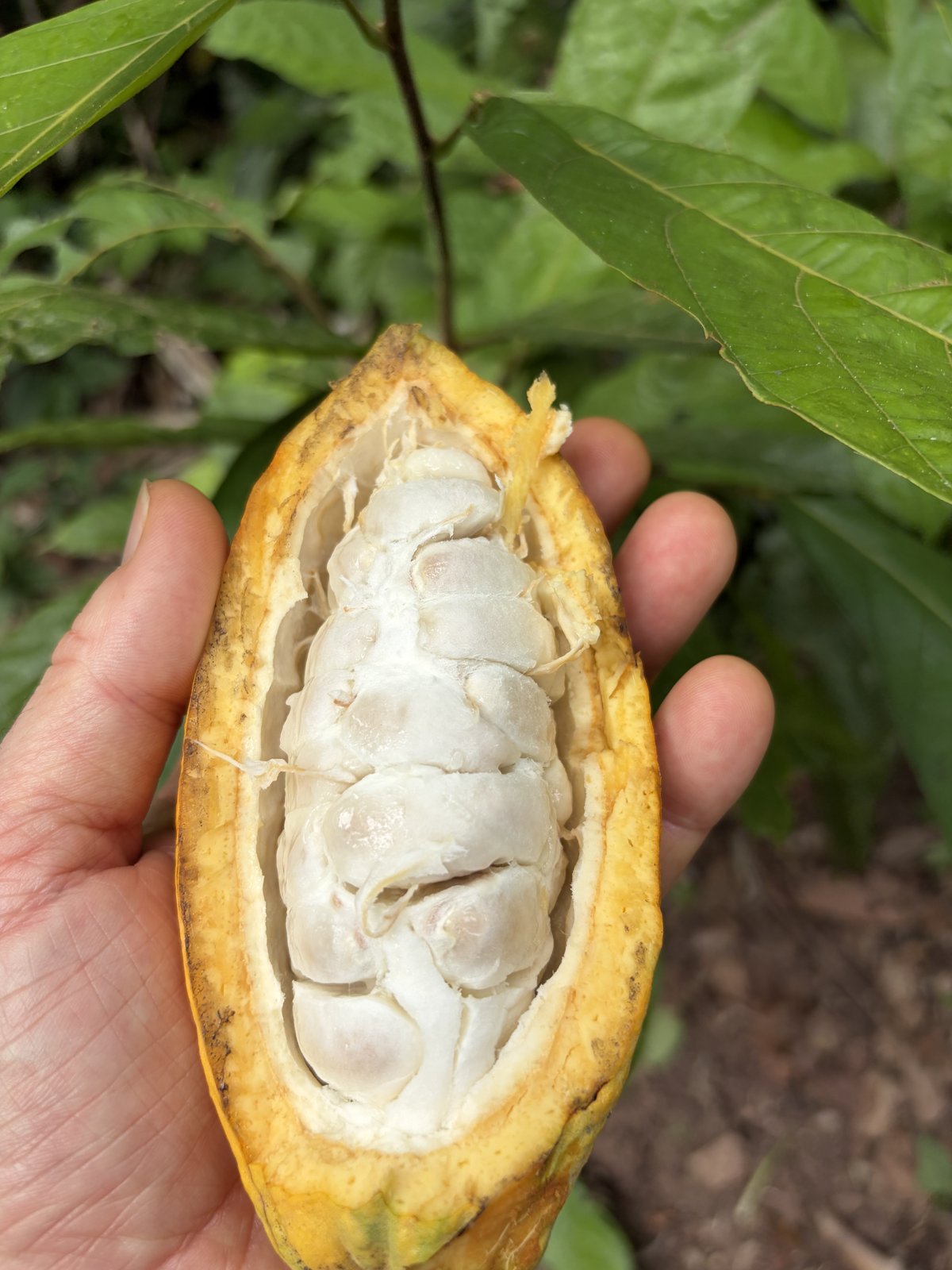
The oldest clear evidence of cacao domestication also comes from this region. Archaeological remains from the Mayo-Chinchipe-Marañón culture, including the Montegrande temple in Jaén excavated by archaeologist Quirino Olivera, date cacao use and domestication to more than 5,300 years ago. The researchers suggest the Cajamarca-Amazonas group may be an ancient cultivar from that time. Learn more about how cacao grows and what Criollo cacao is.
Why does this matter for health? Different genetic groups can carry different levels of bioactive compounds. Genetics is the first variable in our Bean to Brain model, before processing and digestion even begin.
Harvest, fermentation and drying: where the chemistry changes
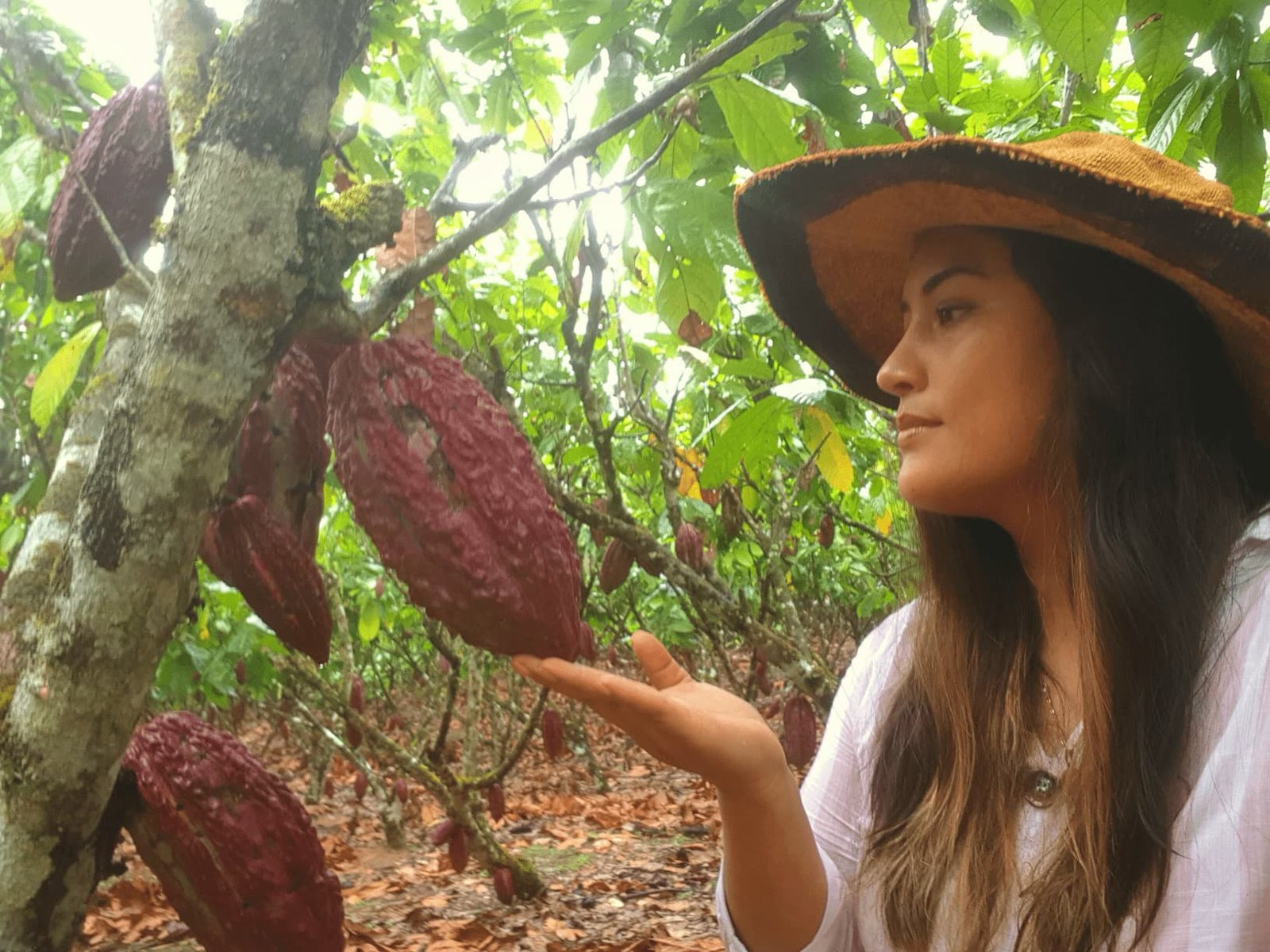
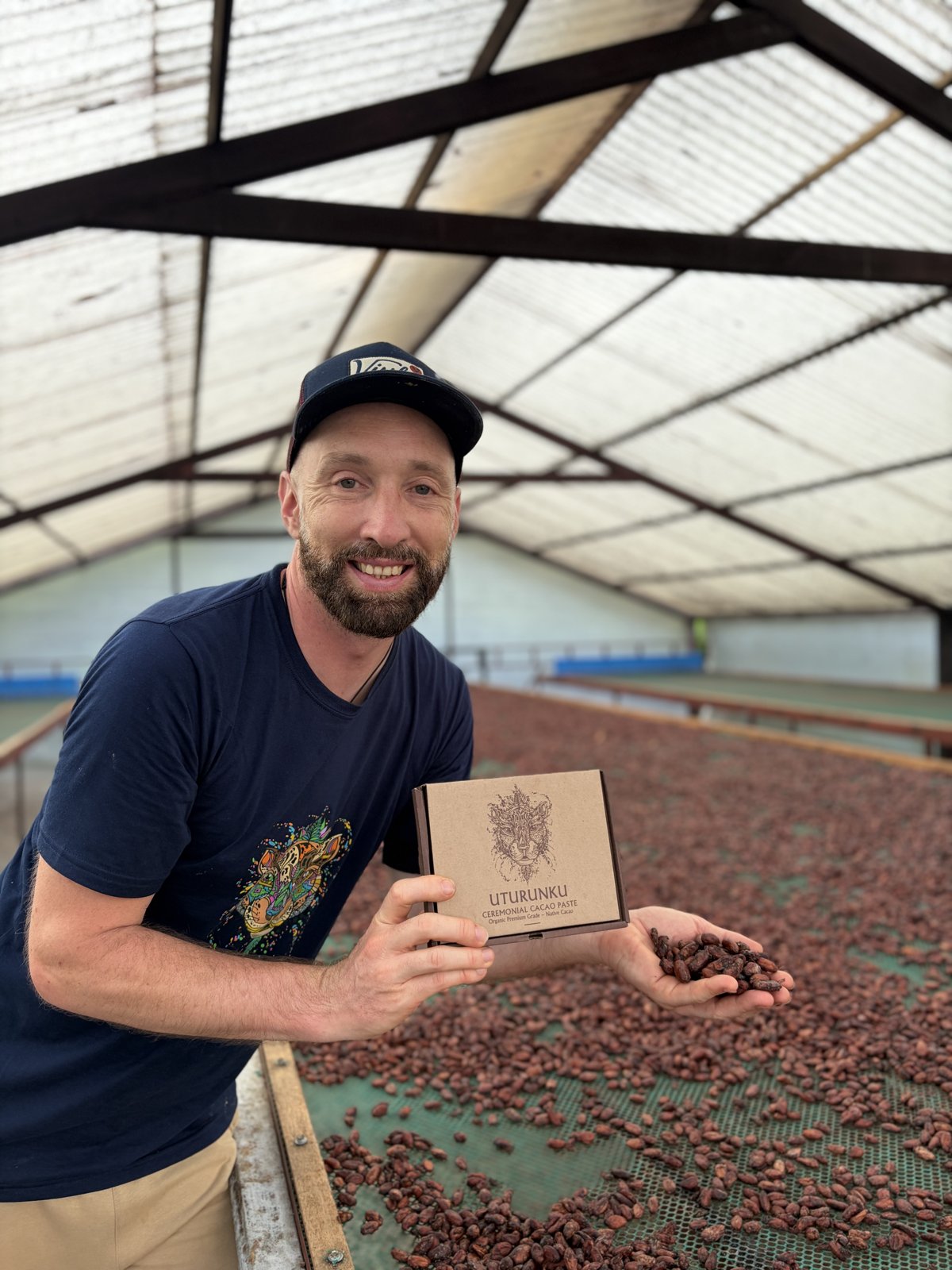
After harvest, the beans are fermented, dried and sometimes roasted. Each step transforms the bean. Fermentation by yeasts and bacteria produces acids and flavour. Drying brings moisture down to 6–8%. Roasting drives off volatile acids and triggers Maillard reactions.
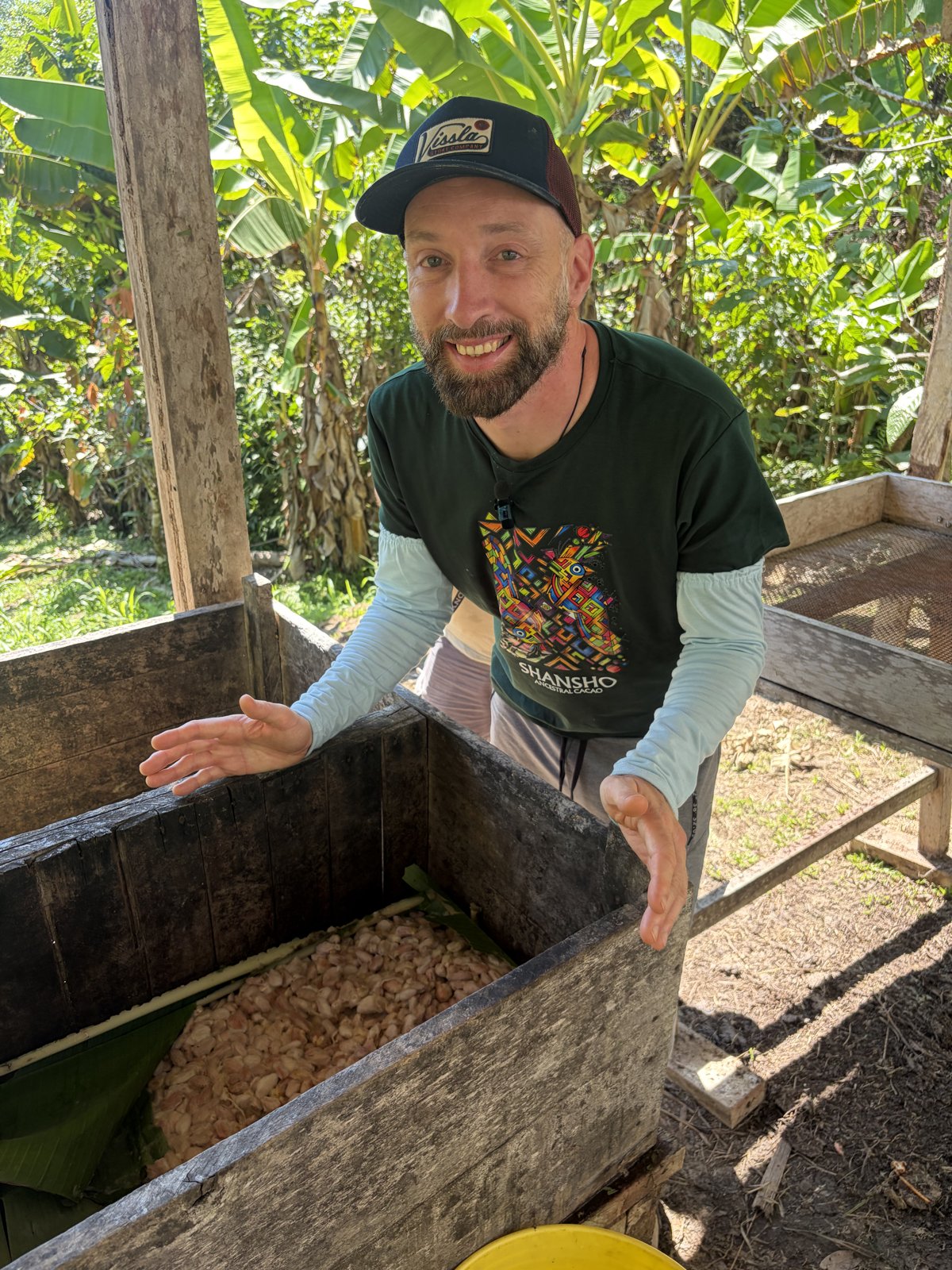
These steps also change cacao's bioactive compounds. That's why the Otago study compares cacao samples with different fermentation lengths, drying times and roasting temperatures.
To the brain: cacao, tryptophan and serotonin
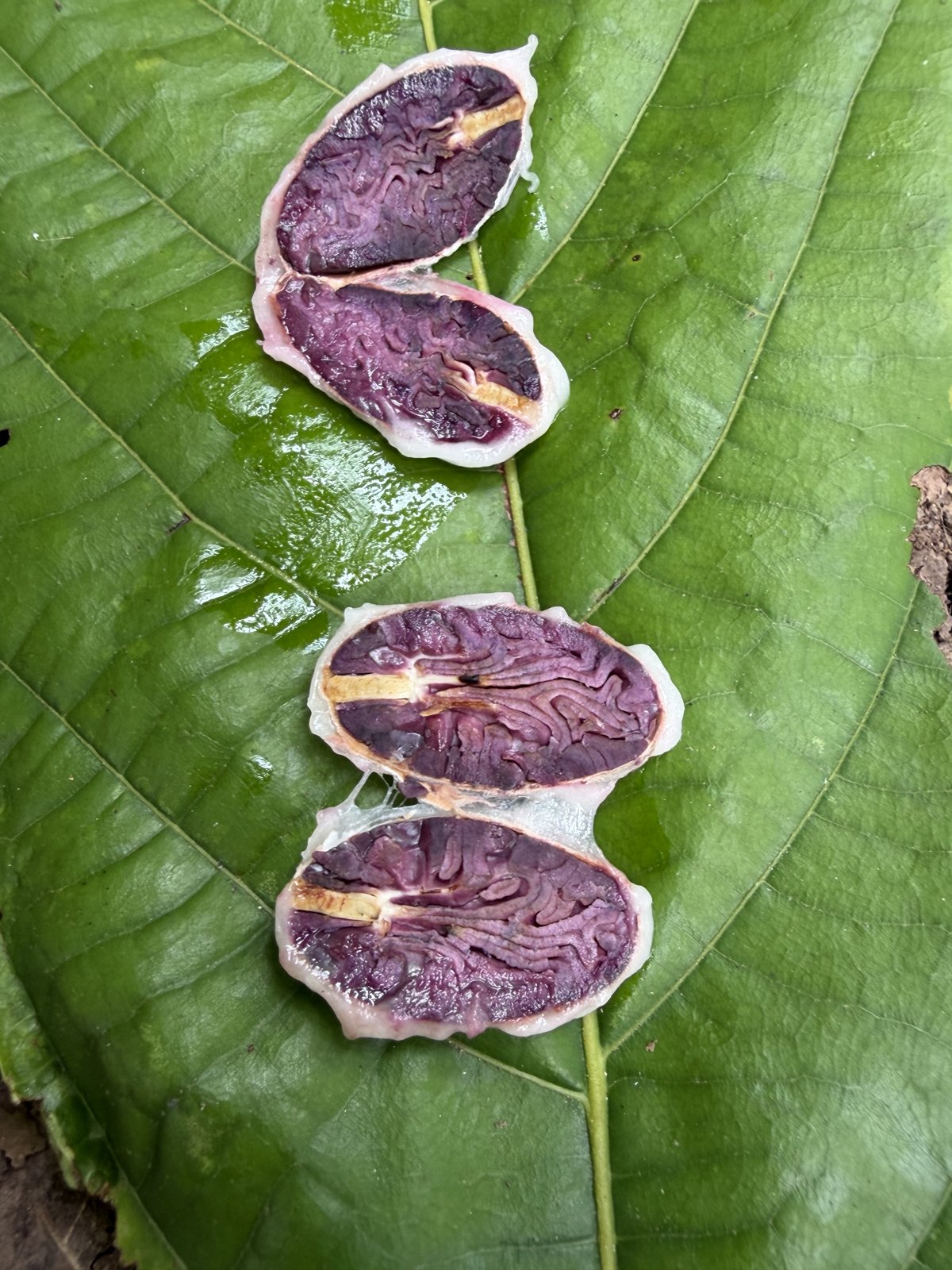
The project centres on tryptophan, an essential amino acid found in cacao. Our bodies can't make it, so we must get it from food. Tryptophan is the main precursor of serotonin, the neurotransmitter linked to mood, calm and contentment.
After we eat it, tryptophan can follow four paths:
- Serotonin – supports mood and, later, melatonin for sleep
- Kynurenine – helps cells keep balance; favoured when the gut is inflamed
- Indoles – made by gut microbes from leftover tryptophan
- Protein synthesis – uses less than 1%
The key point: inflammation in the gut pushes more tryptophan toward kynurenine and away from serotonin. Cacao is rich in polyphenols, which are known for anti-inflammatory activity. Our hypothesis is that cacao may deliver both the tryptophan and the phytochemicals that create the right gut environment for serotonin production.
How the Otago study tests this
The lab model follows cacao through three questions:
- Processing – How do fermentation, drying and roasting change the bean's chemistry?
- Digestion – How do cacao compounds survive a simulated oral, gastric, intestinal and microbial digestion?
- The gut – Which path does tryptophan take in intestinal cells (Caco-2 and Colo320 cell lines)?
At each step, metabolites are measured by HPLC with fluorescence detection. The team also measures serotonin release, gut-barrier health and anti-inflammatory effects.
Cacao contains other mood-related compounds too, including theobromine, phenylethylamine (PEA), N-acylethanolamines and polyphenols. Our wider program studies how these work together. Read more on what cacao is and cacao vs cocoa.
What this means for your cacao
Our goal is simple: use real science to understand why traditional cacao feels the way it does. Then use that knowledge to make better cacao.
- Origin matters. We source ancestral cacao from Peru, home to 16 native genetic groups and more than 5,300 years of cacao culture.
- Processing matters. By measuring how fermentation, drying and roasting change bioactives, we can refine how our cacao is made.
- Whole bean matters. Ceremonial cacao is the full bean – nothing added, nothing taken away – so more of its natural compounds stay intact.
- Future cacao. The long-term question: can we create cacao tailored for specific wellbeing uses?
Not sure which cacao to start with? Compare Amaru vs Uturunku vs Shansho, or try our Cacao Trilogy, Uturunku Ceremonial Cacao, Shansho Ancestral Cacao or the Cacao Sampler Pack.
This is early-stage, laboratory research. It does not yet prove health effects in people, and cacao is not a treatment for any condition. We'll share results as they're published.
Frequently asked questions
Does cacao contain tryptophan?
Yes. Cacao contains tryptophan, an essential amino acid and the main building block of serotonin. Our Otago research studies how much survives processing and digestion.
Can cacao boost serotonin?
Cacao provides tryptophan and anti-inflammatory polyphenols, which may support serotonin production in the gut. The University of Otago project is testing this in laboratory models.
Is all cacao the same?
No. Genetics, growing conditions, fermentation, drying and roasting all change cacao's chemistry. Peru alone has 16 native genetic groups of cacao.
What is ceremonial cacao?
Ceremonial cacao is whole-bean cacao with nothing added or removed. It is traditionally grown, hand-selected, stone-milled and made with respect for its Indigenous origins. Read our full guide.
Who is researching cacao in New Zealand?
Seleno Health funds a PhD project at the University of Otago, supervised by Professor Lyn Wise, studying cacao tryptophan metabolism and the gut-brain axis.
Follow the research
We'll share updates from the Bean to Brain project as the work progresses. Want to experience the cacao behind the science? Shop our ceremonial cacao, or deepen your knowledge with our Level 1 Cacao Foundations training.
References
- Thomas, E., Iman, S., Atkinson, R., et al. (2023). Diversidad genética de cacao en el Perú. In Catálogo de cacaos del Perú (pp. 9–56). Bioversity International and MOCCA, Lima.
- Zarrillo, S., et al. (2018). The use and domestication of Theobroma cacao during the mid-Holocene in the upper Amazon. Nature Ecology & Evolution, 2, 1879–1888.
- Richard, D. M., et al. (2009). L-Tryptophan: basic metabolic functions, behavioral research and therapeutic indications. International Journal of Tryptophan Research, 2, 45–60.
- Bucher, L. (2026). Mechanistic Insight into Cacao Tryptophan Metabolism. University of Otago symposium presentation.


